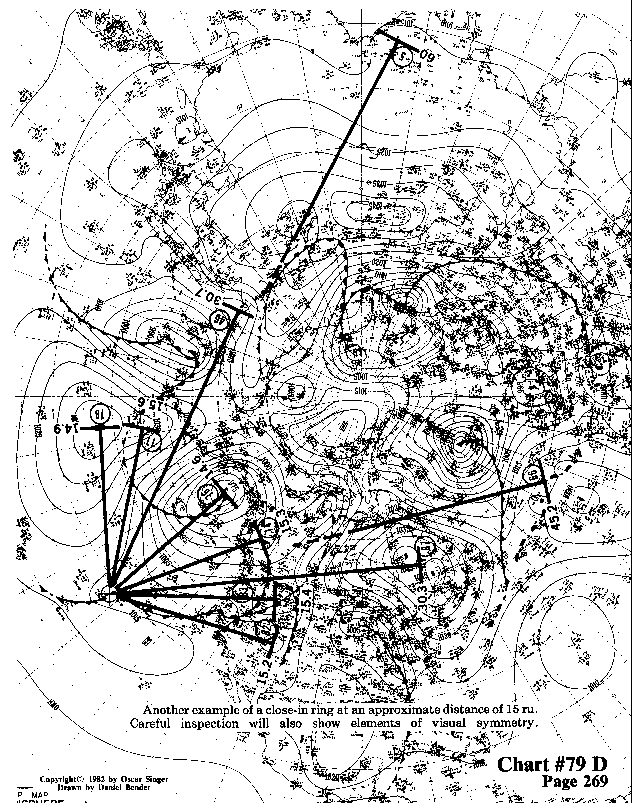
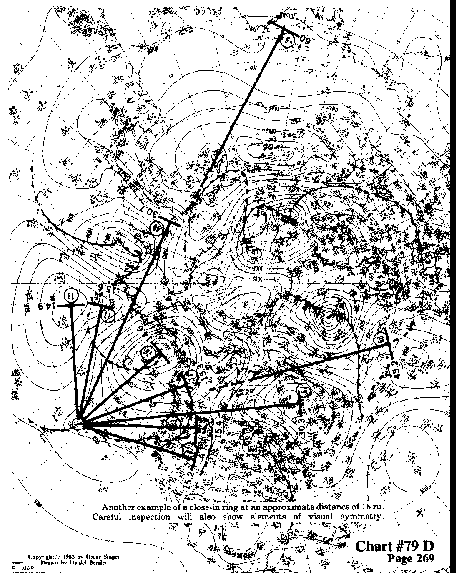
Another example of a close-in ring at an approximate distance of 16 ru.
Careful inspection will also show elements of visual symmetry.
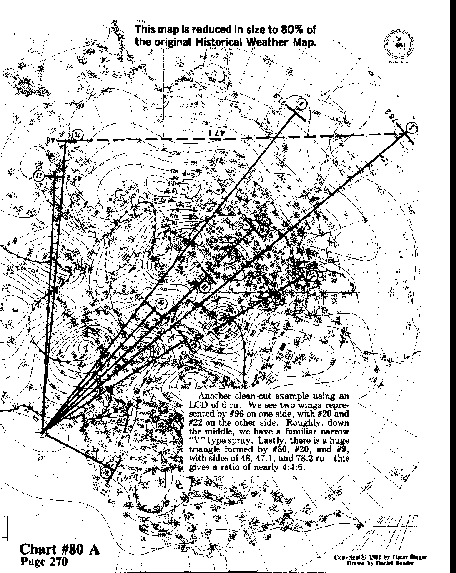
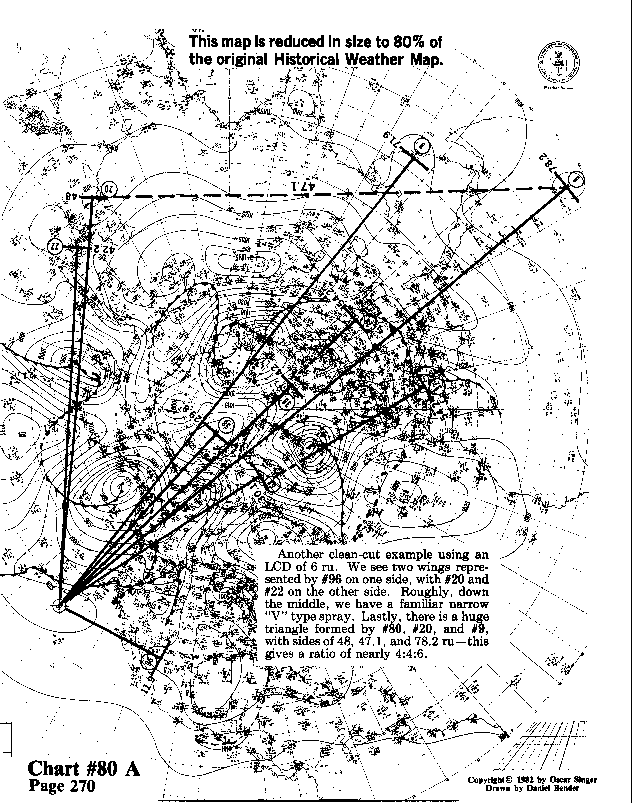
Another cleancut example using an LCD of 6 ru. We see two wings
represented by #96 on one side, with #20 and #22 on the other side.
Roughly, down the middle, we have a familiar narrow "V"
type spray. Lastly, there is a huge triangle formed by #80, #20,
and #9, with sides of 48, 47.1, and 78.2 ru--this gives a ratio
of nearly 4:4:6.
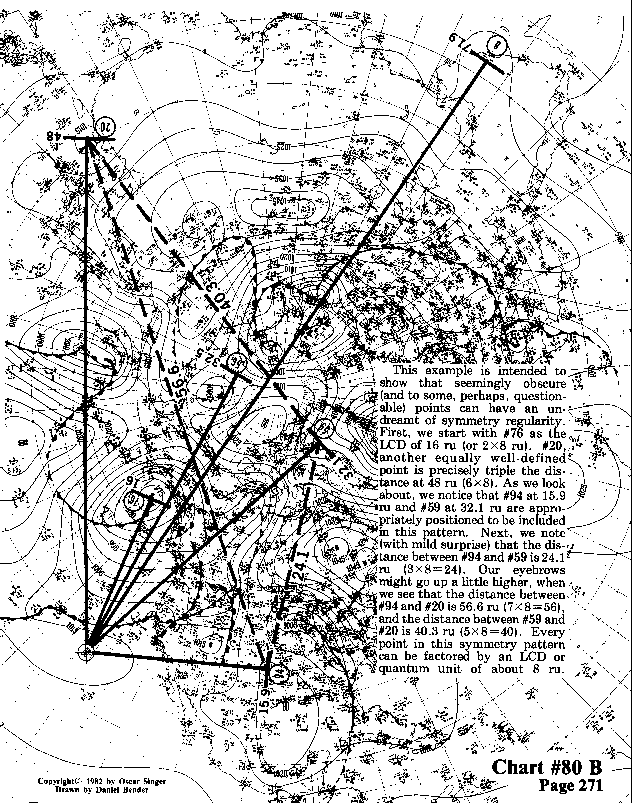
This example is intended to show that seemingly obscure
(and to some, perhaps, questionable) points can have an undreamt
of symmetry regularity .First, we start with #76 as the LCD of 16 ru (or 2x8 ru).
#20, another equally well-defined. point is precisely triple the distance
at 48 ru (6x8). As we look about, we notice that #94 at 15.9 ru and #59 at 32.1 ru
are appropriately positioned to be included in this pattern. Next, we
note (with mild surprise) that the distance between #94 and
#59 is 24.1 ru (3 x 8 = 24) . Our eyebrows might go up a little higher, when
we see that the distance between #94 and #20 is 56.6 ru (7 x 8 = 56),
and the distance between #59 and #20 is 40.3 ru (5 x 8 = 40) . Every
point in this symmetry pattern can be factored by an LCD or
quantum unit of about 8 ru.
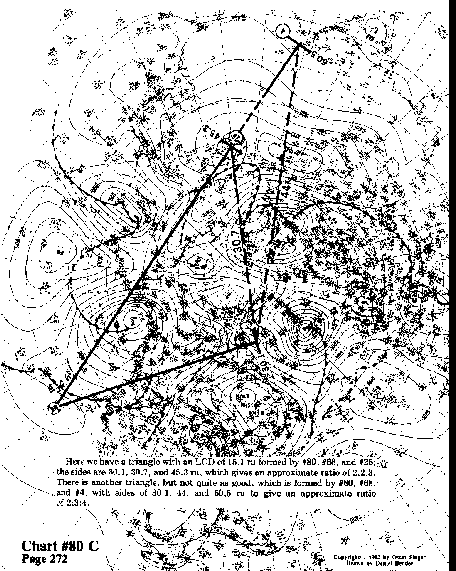
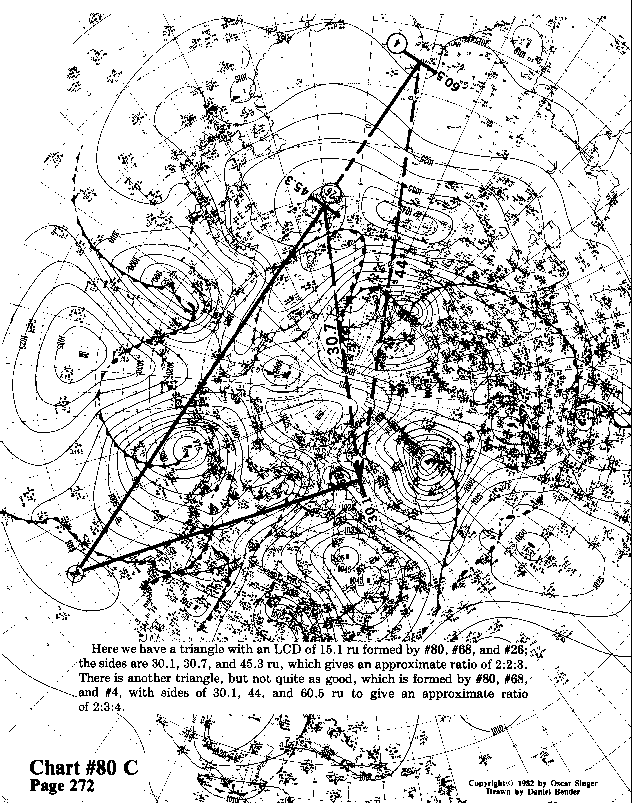
Here we have a triangle with an LCD of 15.1 ru formed by #80,
#68, and #26; the sides are 30.1, 30.7, and 45.3 ru, which gives
an approximate ratio of 2:2:3. There is another triangle, but
not quite as good, which is formed by #80, #68, and #4, with sides
of 30.1, 44, and 60.5 ru to give an approximate ratio of 2:3:4.
With an LCD of 8.8 ru we get a triangle formed by #80,
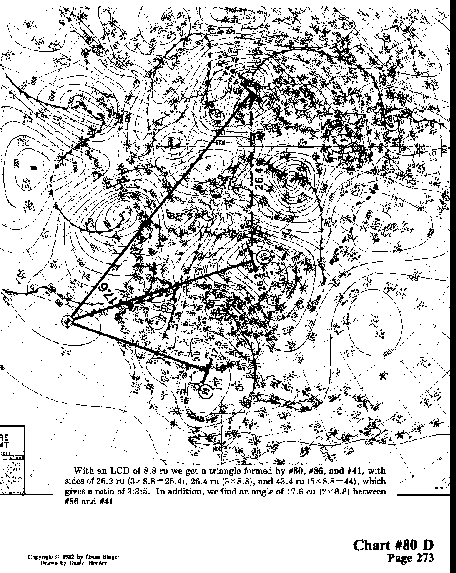
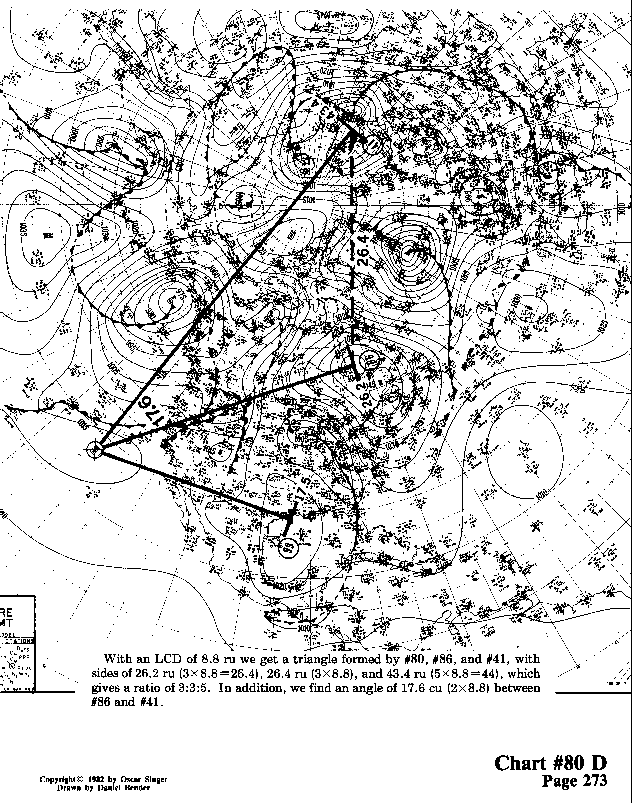
#86, and #41, with sides of 26.2 ru (3 X 8.8 = 26.4), 26.4
ru (3 x 8.8), and 43.4 ru (5 x 8.8 = 44), which
gives a ratio of 3:3:5. In addition, we find an angle
of 17.6 cu (2 x 8.8) between #86 and #41.
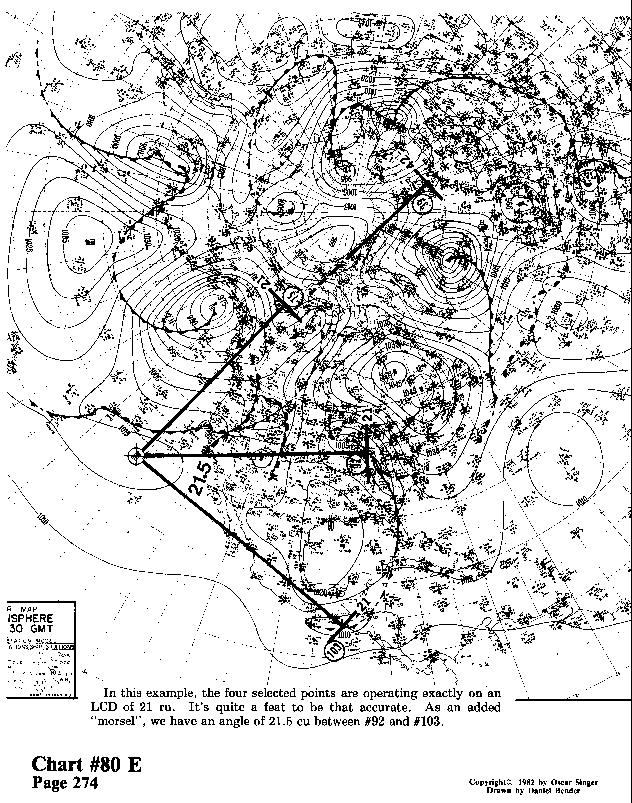
In this example, the four selected points are operating exactly
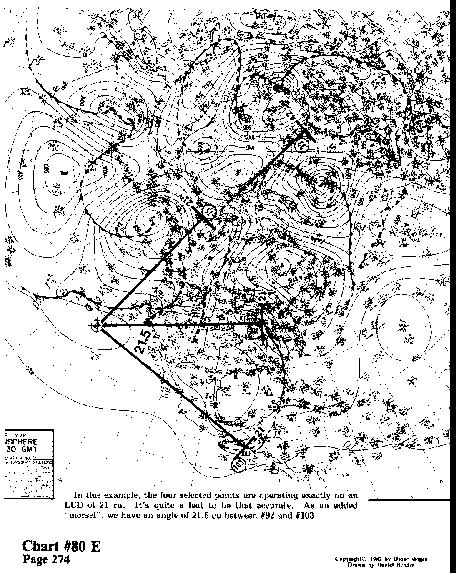
on an LCD of 21 ru. It's quite a feat to be that accurate. As
an added "morsel", we have an angle of 21.5 cu between
#92 and #103.
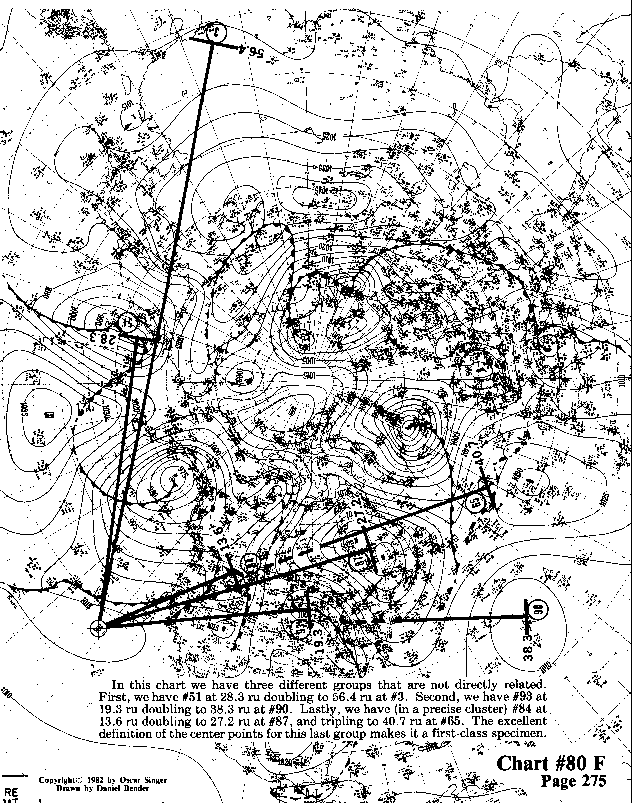
In this chart we have three different groups that are not directly
related. First, we have #51 at 28.3 ru doubling to 56.4 ru at #3. Second,
we have #93 at 19.3 ru doubling to 38.3 ru at #90. Lastly, we have (in a precise
cluster) #84 at 13.6 ru doubling to 27.2 ru at #87, and tripling to 40.7 ru at
#65. The excellent definition of the center points for this last group makes it a
first-class specimen.
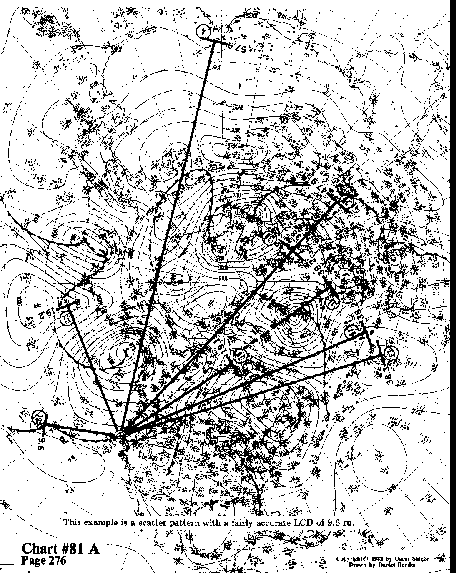
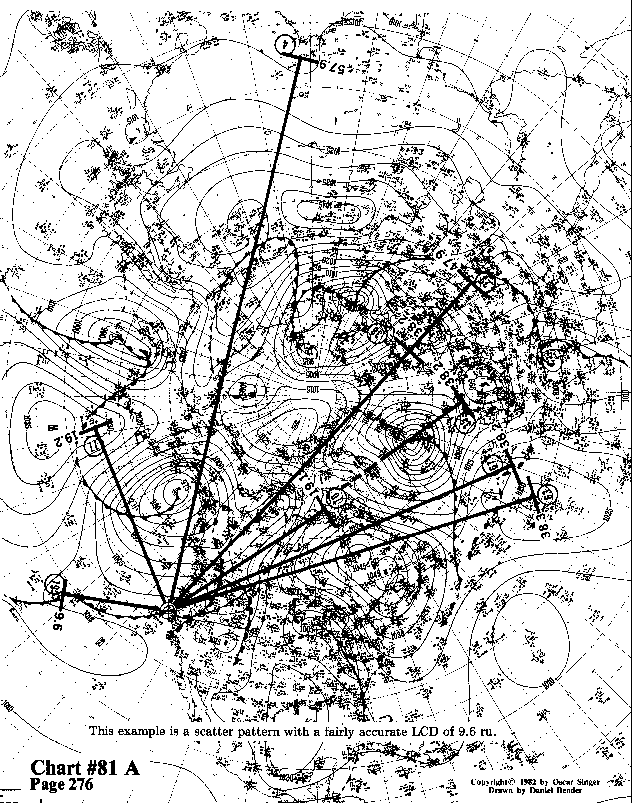
This example is a scatter pattern with a fairly accurate LCD of 9.6 ru.
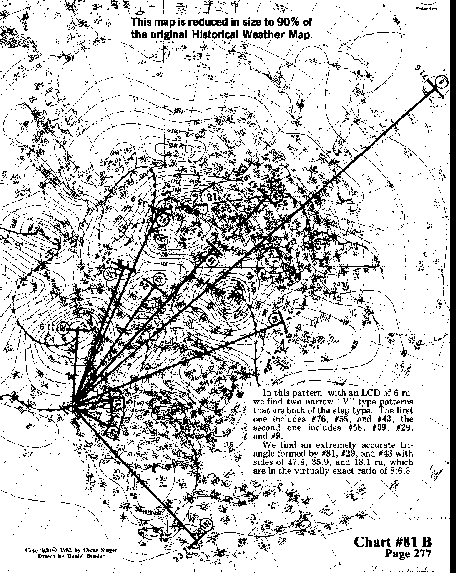
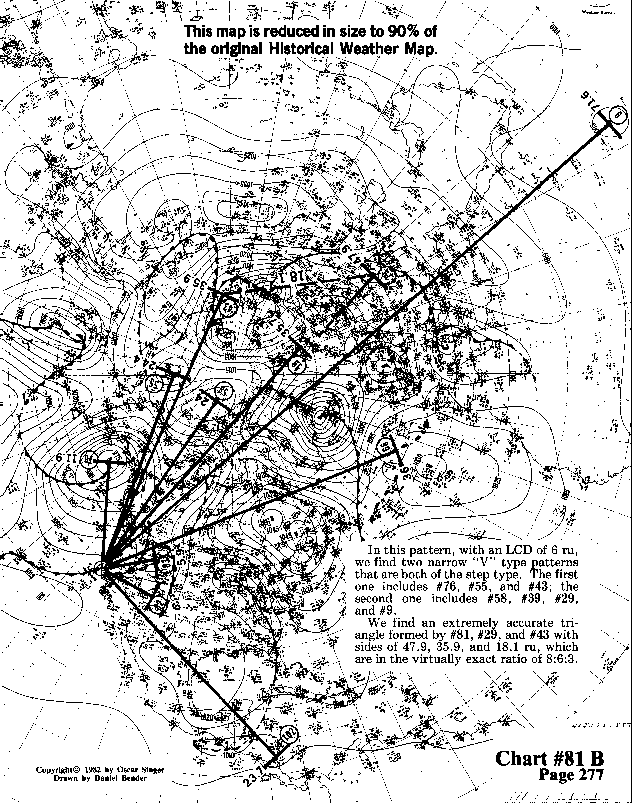
In this pattern, with an LCD of 6 ru, we find two narrow "V" type patterns that are both of the step type. The first one includes #76, #55, and #43; the second one includes #58, #39, #29, and #9.
We find an extremely accurate triangle formed by #81, #29, and
#43 with sides of 47.9, 35.9, and 18.1 ru, which are in the virtually
exact ratio of 8:6:3.
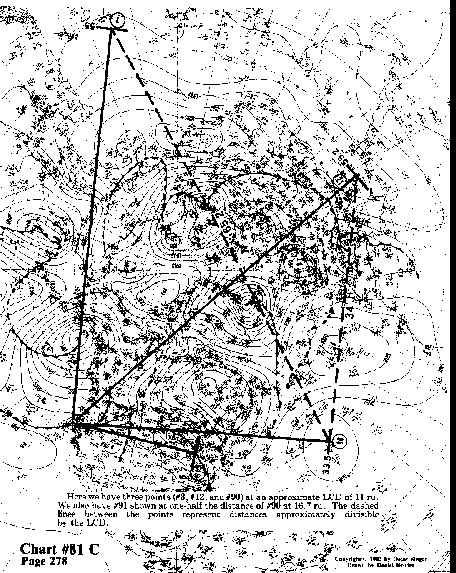
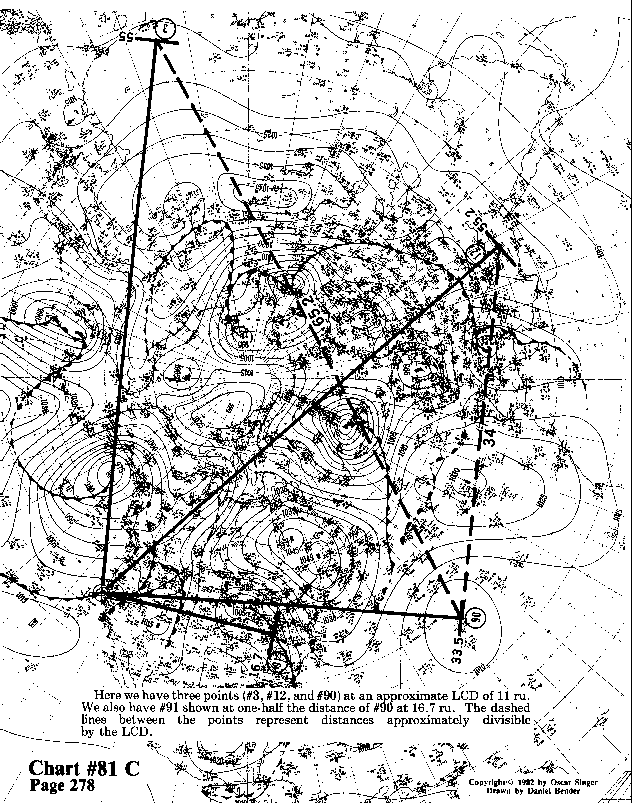
Here we have three points (#3, #12, and #90) at an approximate LCD of 11 ru.
We also have #91 shown at one-half the distance of #90 at 16.7 ru.
The dashed lines between the points represent distances approximately
divisible by the LCD.
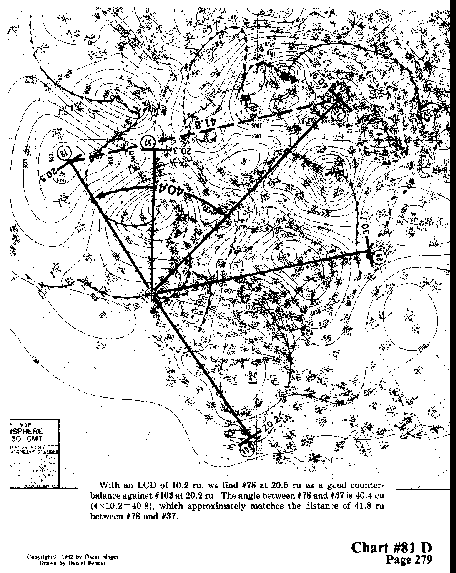
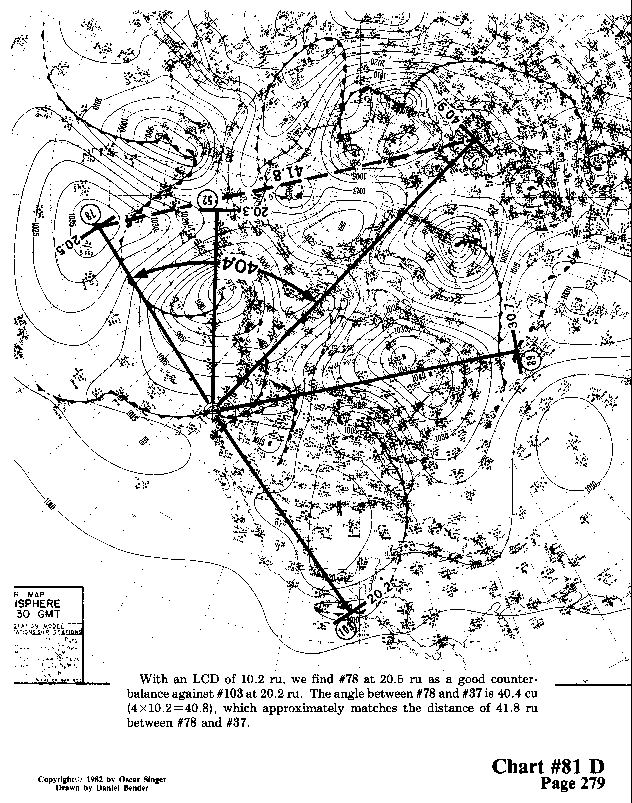
With an LCD of 10.2 ru, we find #78 at 20.5 ru as a good counterbalance
against #103 at 20.2 ru. The angle between #78 and #37 is 40.4
cu. (4x10.2=40.8), which approximately matches the distance of
41.8 ru between #78 and #37.
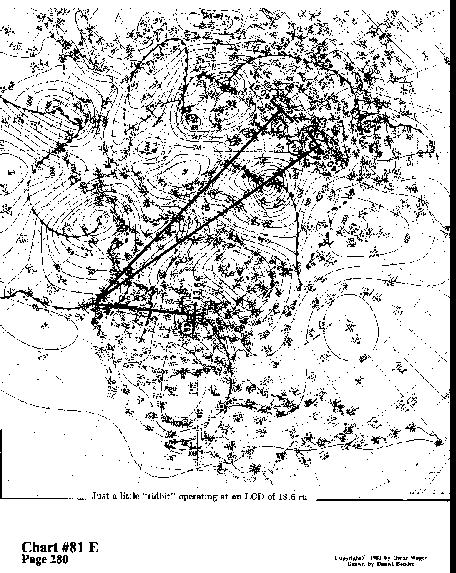
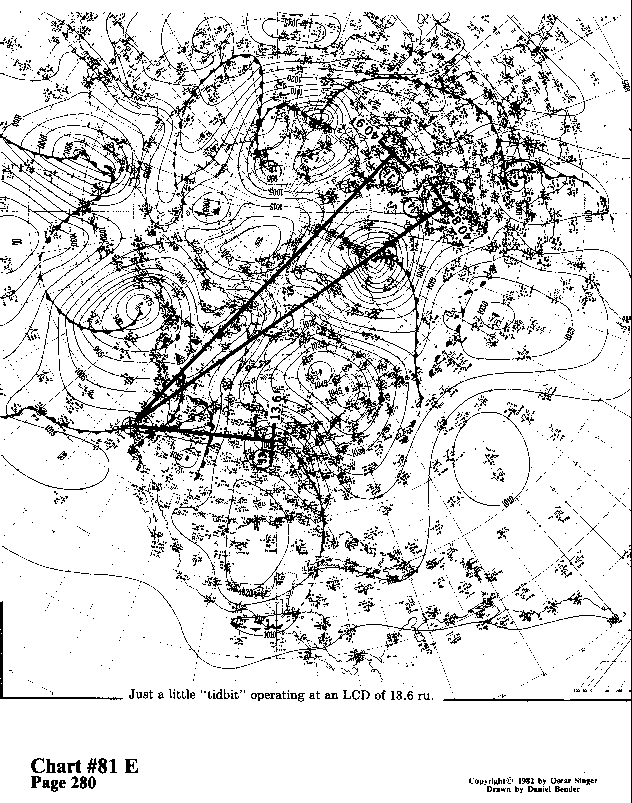
Just a little "tidbit" operating at an LCD of 13.6 ru.